
Let's be honest for a second. When Part 2 of Chainsaw Man dropped and we were introduced to Asa Mitaka, a lot of fans were skeptical. After Part 1 with Makima's terrifying allure, Denji's feral innocence, and Power's chaotic heart, how do you follow that up?
Fujimoto's answer was: give us a girl so painfully, embarrassingly normal that it almost hurts to watch.
And honestly... That might be the most devastating creative decision he's ever made. Because Asa Mitaka isn't a devil without a morals, She's something far more terrifying.. she's us. The insecure, self-sabotaging, desperately lonely parts of us that we usually keep buried under layers of social performance.
So let's talk about her. Properly :)
Who Is Asa Mitaka, Really?
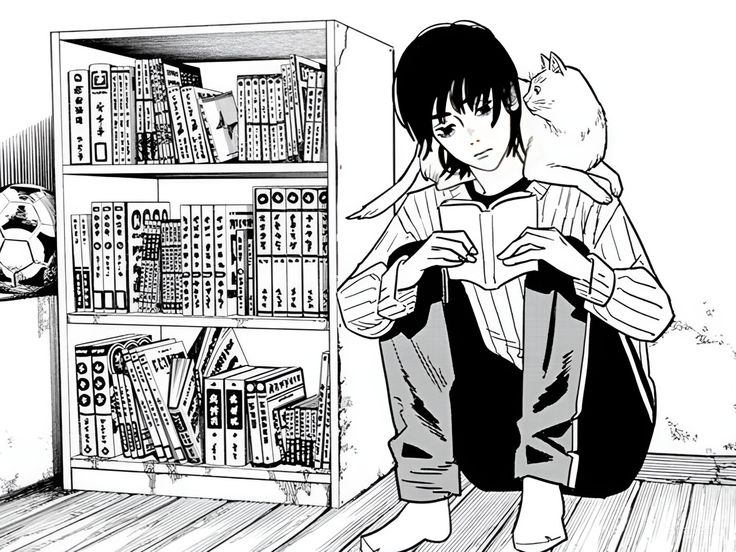
On paper, Asa is unremarkable. A quiet high schooler. Average grades. No friends. She sits alone at lunch, gets pushed around by her classmates, and spends most of her internal monologue wishing everyone around her would just drop dead. She's introduced in Part 2 of Chainsaw Man as the new protagonist, and if you came in expecting another Denji's chaotic and feral energy, Asa is going to feel like a bucket of cold water.
And that's exactly the point.
Asa is the protagonist who doesn't want to be a protagonist. She doesn't have dreams. She doesn't want to save the world or even save herself in any heroic sense. She just wants, more than anything, to be liked. To belong. To have someone or anyone look at her and think she matters.
After being killed by the Class President, Asa is resurrected by Yoru, the War Devil, who takes over half her brain and turns her into a living weapon. From there, Asa is dragged through one humiliating, heartbreaking, and darkly funny situation after another, all while carrying around this crushing weight of social anxiety, self-hatred, and desperate loneliness.
Why Asa Is the Most Grounded Character in Chainsaw Man
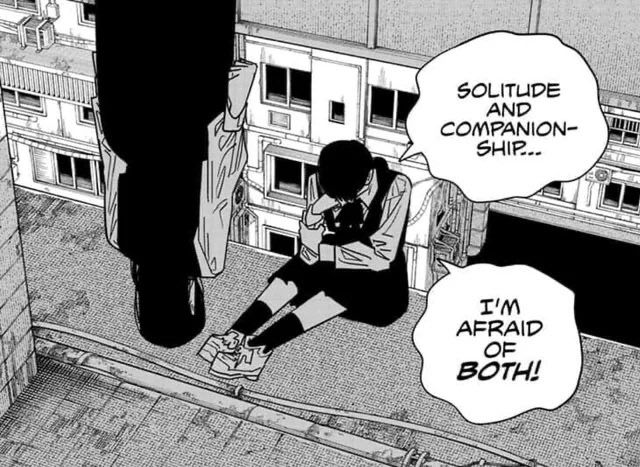
Here's what makes Asa different from almost every other character in fiction with similar trope, Fujimoto doesn't romanticize her trauma. She's like this because she's a deeply insecure, socially stunted teenager who doesn't know how to connect with people and has never been taught how.
Let's break down what makes her feel so real:
1. Her Moral Compass Is Based on Fear
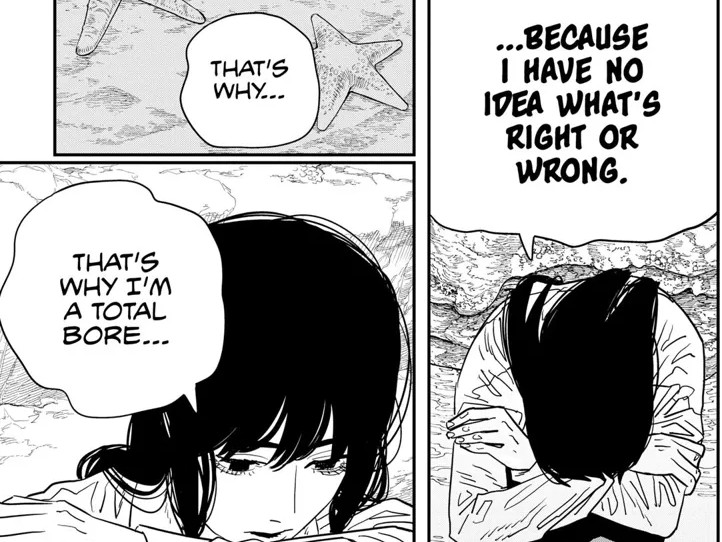
This is one of the most brilliant things about her writing. Asa doesn't avoid doing bad things because she has strong morals. She avoids them because she's scared of making mistakes.
We see this potrayed perfectly in Chapter 114, when Asa and Denji are trapped in an aquarium for days without food. Starving and cornered, Yoru urges Asa to kill Denji and turn him into a weapon. But Asa can't bring herself to do it. And her explanation isn't heroic or noble, it's devastatingly honest:
"But even cornered and starving like this... I just can't do it. Not because I don't have the guts... or because it goes against my principles. The real reason I can't is... because I have no idea what's right or wrong. My life is just... one long string of attempts to avoid making mistakes."
That line hits me to be honest, Because it's true for so many people. We don't always do the right thing because we're good. We do it because we're scared of the consequences. And Asa is one of the only characters in fiction I've ever seen articulate that honestly.
2. Social Cluelessness as Tragedy
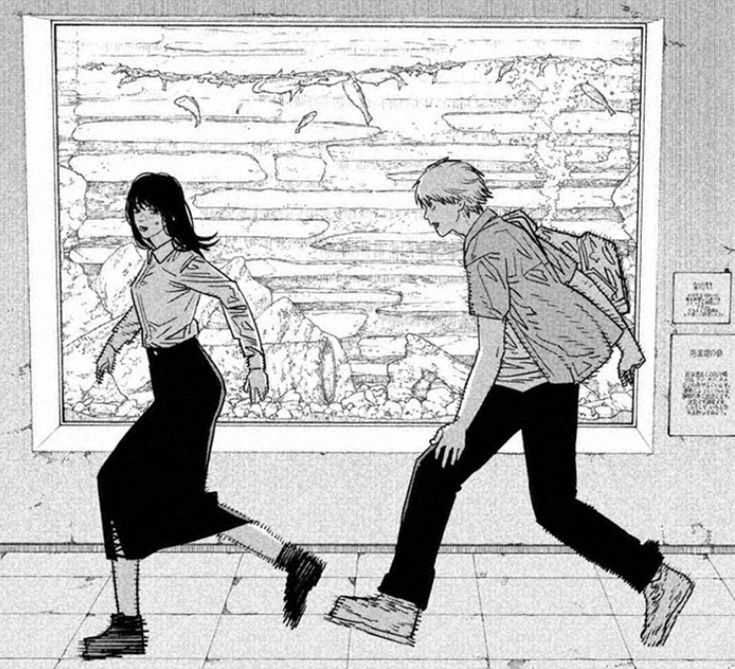
Asa's idea of a good date is lecturing Denji about sea anemones for hours. She genuinely believes this will make him fall in love with her. Yoru, a devil with almost zero understanding of human behavior, has more social awareness than Asa does.
This isn't played for generic "awkward cute" vibes. It's portrayed as genuinely sad. Asa tries, she puts in effort, she just has absolutely no idea how to read people, how to present herself, or how to understand what others actually want. And when things go wrong as they inevitably do, she falls apart.
3. She Craves Validation While Pretending She Doesn't
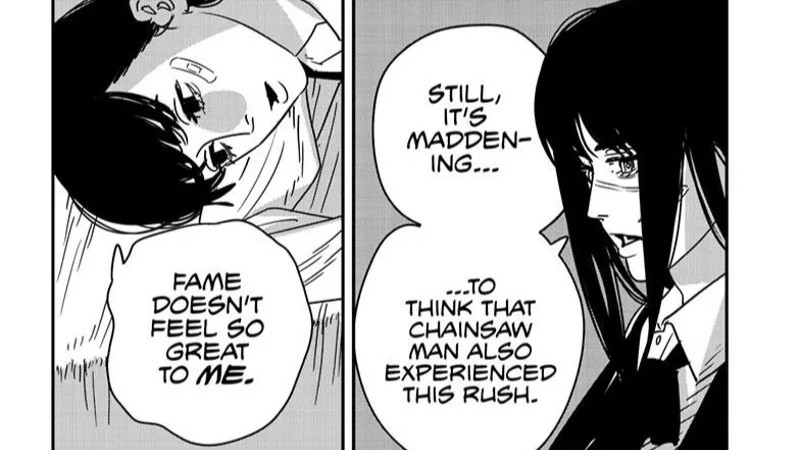
When the public starts praising her as a devil hunter, Asa claims she doesn't care about being popular. Then the very next panel shows her smiling at a TV screen while people compliment her. Fujimoto doesn't even let her have the dignity of pretending for more than a second.
This is the kind of character writing that makes you smile and then immediately feel guilty for smiling, because you know you've done the exact same thing.
The "Femcel" Label
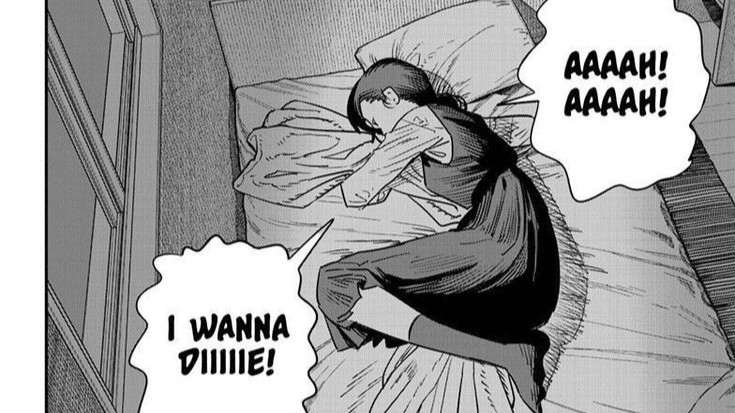
Now let's talk about the elephant in the room. If you've spent any time in Chainsaw Man discussion spaces, you've seen it, people calling Asa a femcel.
For those unfamiliar, "femcel" is internet slang, a blend of "female" and "incel." It describes women who feel deeply isolated, romantically hopeless, and consumed by resentment toward both themselves and the social world that they feel has rejected them. It's the female-coded equivalent of the "incel" archetype, not necessarily a literal one, but someone who shares that same energy of involuntary loneliness, bitterness, and desperate yearning for connection they feel unable to achieve.
So... is Asa a femcel?
Yeah... Kind of. But that's not an insult, it's a testament to the writing.
Just think about it:
She's desperately lonely but convinced nobody could ever genuinely like her. She resents her peers for having the social connections she can't seem to build. When she tries to pursue romance with Denji, she's catastrophically bad at it, not because she's unlovable, but because she has no idea how to be vulnerable in a healthy way.
That's femcel behavior and Fujimoto writes it with such precision that it's impossible not to see.
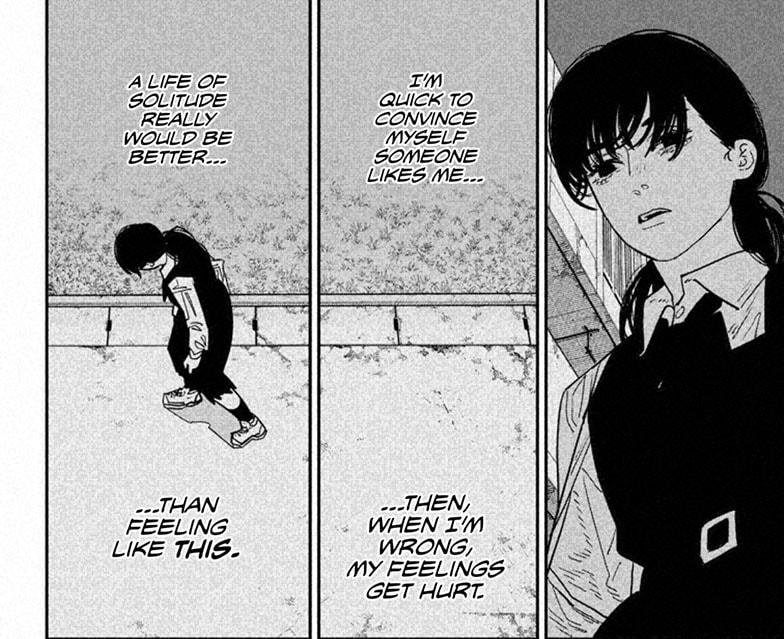
But here's the thing, calling Asa a femcel isn't reductive, it's descriptive. Fujimoto isn't mocking her he's not using her as a punchline. He's writing a character who embodies a very real, very common form of psychological suffering that young women in particular experience but rarely see represented in media with this level of honesty.
Male characters get to be socially awkward all the time in fiction, it's charming, it's relatable, it's a "lovable loser" trope. But when a female character displays the same traits, the resentment, the loneliness, the desperate need for validation, the inability to connect suddenly it becomes cringe or femcel. And I think that double standard says more about us as an audience than it does about Asa as a character.
The reason the label sticks is because Fujimoto wrote her so accurately. He didn't give her the usual manga protagonist redemption arc where she just "learns to believe in herself" and everything clicks. She gets worse before she gets better. She makes selfish decisions. She thinks about suicide. She falls in love with the very person she was supposed to destroy. She joins the chainsaw man cult because she's so desperate for purpose that she'll take anything that looks like meaning.
And through all of it, she remains understandable. You never stop rooting for her, even when she's being awful. Because you recognize the pattern. You've felt some version of it. Maybe not the devil hunting or the suicide thoughts, but the core of it, the feeling of being fundamentally broken in a world that seems to work effortlessly for everyone else.
What Makes Asa Unforgettable
Here's what I keep coming back to, Asa Mitaka is a character who proves that you don't need to be powerful, cool, or even likable to be compelling. You just need to be true.
Fujimoto created a character who is petty, selfish, cowardly, jealous, socially hopeless, and morally ambiguous, and somehow made her the most human character in a manga about devils made of chainsaws and fear. She's not grounded despite the supernatural world around her. She's grounded because her internal world, the anxiety, the loneliness, the desperate need to matter is more real than anything else on the page.
And maybe that's why the femcel label resonates because it acknowledges something true, Asa represents a kind of female loneliness and social failure that mainstream media almost never touches. She's not the quirky loner who's secretly popular. She's not the misunderstood outcast who turns out to be special. She's just... a girl who can't figure out how to be a person around other people. And she's suffering because of it. Every single day.
Final Thoughts
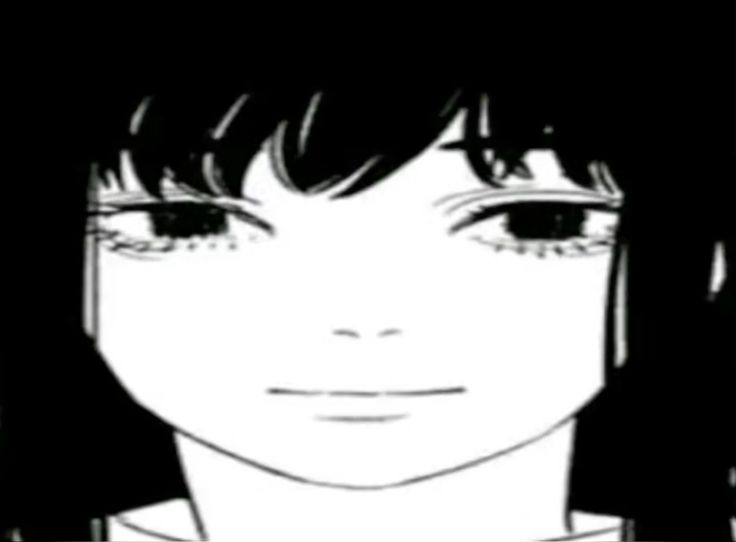
Asa Mitaka isn't easy to read. She's not supposed to be. She holds up a mirror to every socially anxious and self-sabotaging part of ourselves that we'd rather ignore. And in a medium that often gives us heroes who transcend their flaws, Asa just... sits in them. Wallowing, struggling, occasionally finding a moment of grace, and then immediately ruining it.
She's the most human devil hunter in fiction. And whether you call her a femcel, a tragedy, or just a girl trying her best in a world that doesn't make it easy, she's unforgettable.
And honestly? I think that's exactly what Fujimoto intended.
What do you think about Asa as a character? Do you think the femcel label is accurate, or does it miss the point? Drop your thoughts below, I'd love to hear them!